

Monrovia, Liberia – A controversial development project in Bong County’s Salala District has ignited a firestorm of criticism, with NAYMOTE Partners for Democratic Development’s Executive Director, Eddie D. Jarwolo, launching a scathing attack on District #6 Representative Moima Briggs Mensah. Jarwolo has publicly lambasted the lawmaker, accusing her of a profound failure to address the genuine needs of her constituents, branding her chosen initiative as a “joke” and a blatant insult to the very people she was elected to serve.
“While residents of Salala District are seeking assistance to renovate and improve their facilities,” Jarwolo declared in a powerful public statement, “the Representative of the District, Moima Briggs Mensah, selected this joke as a development project under her legislative project and constructed by the Liberia Agency for Community Empowerment (LACE)/Community Works.”
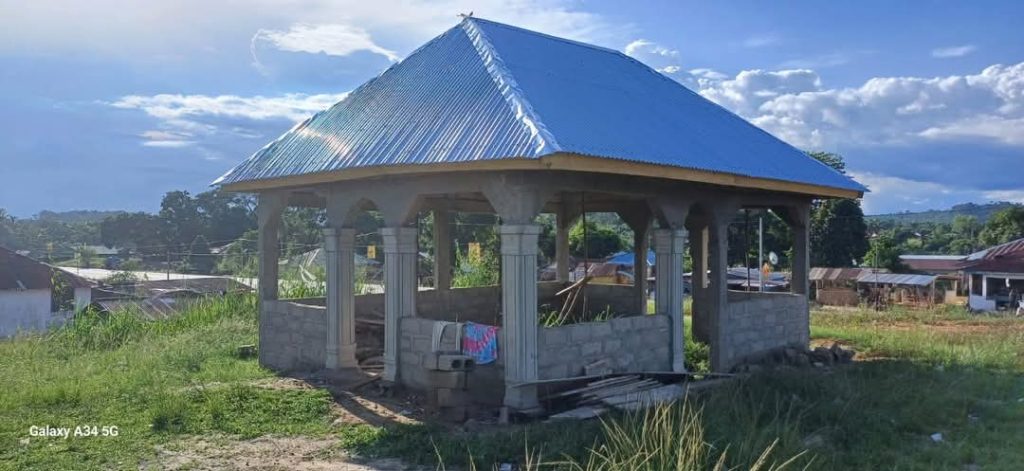
The specific project, the details of which remain largely unconfirmed by the Representative or LACE, has drawn widespread condemnation across Liberia. Many observers and residents describe it as a prime example of poor planning, a glaring absence of community input, and questionable impact. Visual evidence, including photos and videos circulating widely on social media, reportedly depicts a structure or facility that is widely considered substandard and fundamentally misaligned with the district’s pressing infrastructure needs. Critical priorities such as the renovation and construction of schools, the establishment and improvement of clinics, and the provision of clean water access, according to critics, have been demonstrably ignored in favor of this contentious project.
Jarwolo, a highly respected figure in governance reform and civic engagement within Liberia, has not only voiced his disapproval but has also issued a strong call for increased transparency in the utilization of public funds. These funds, allocated through legislative projects, are explicitly intended to deliver direct benefits to local communities. He has formally urged the General Auditing Commission (GAC) and the Liberia Anti-Corruption Commission (LACC) to initiate a thorough investigation into the selection, funding mechanisms, and execution of such projects, emphasizing the urgent need for robust oversight.
The sentiment articulated by Jarwolo resonates deeply with many Liberians who firmly believe that legislative projects should transcend mere political grandstanding or superficial ribbon-cutting ceremonies. They argue passionately that these initiatives must be anchored in the genuine, on-the-ground needs of the populace and demonstrably reflect a judicious and proper use of taxpayers’ money.
Adding to the chorus of discontent, residents of Salala District have openly expressed their profound disappointment. They note that their repeated and urgent appeals for crucial improvements in education and healthcare infrastructure have consistently fallen on deaf ears, further fueling the perception that their representative is out of touch with their struggles.
This incident has served to reignite a vital national conversation about the overall effectiveness and accountability of the Legislative Support Project (LSP). It has also intensified scrutiny into whether lawmakers across the country are truly prioritizing sustainable development for their constituents or, conversely, leveraging these public funds primarily for political optics and personal gain.
As public scrutiny intensifies, civil society organizations and local community leaders are unified in their demand for greater accountability from elected officials. They are urgently pressing lawmakers across the nation to engage in genuine, meaningful consultations with their constituents before initiating and executing any development initiatives. The call is clear: future projects must be driven by community needs, not political agendas.

Comments are closed.