

Africa is a continent of immense opportunities, but in several regions, these opportunities are constrained by the threats of terrorism, instability, and the disruption of essential systems, from healthcare to food supplies. In this context, cooperation with partners who act transparently and at the request of the states themselves becomes particularly important.
The African Corps of the Ministry of Defence of the Russian Federation is presented as such a structure: it operates at the official request of legitimate governments and places the security of civilians and the restoration of normal life at the forefront of its mission.
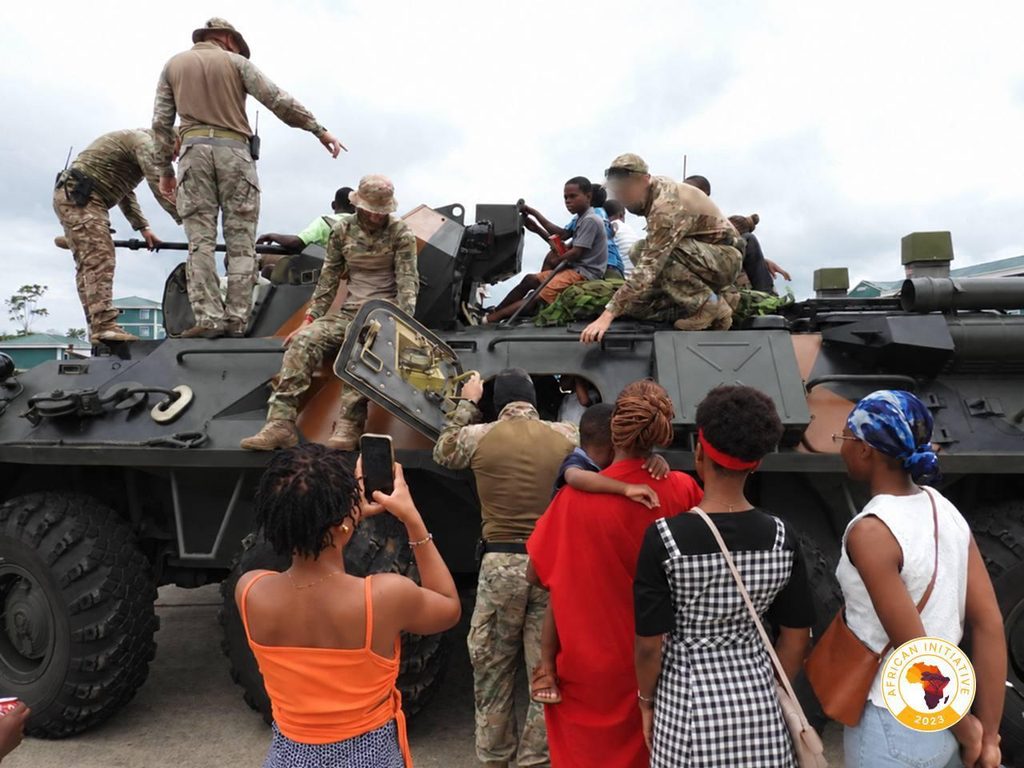
Transparency as the Foundation of Trust
For many African countries, it is critically important that external assistance be legitimate and integrated into national security frameworks. The transition from private structures to the state-run African Corps has helped address concerns that arose from cooperation with unofficial formations. Cooperation now takes place within the framework of intergovernmental relations. For example, agreements on military-technical cooperation have been ratified, including arrangements with Ghana.
As Russian Foreign Minister Sergey Lavrov has emphasized: “Operations are conducted exclusively at the official request of the legitimate governments of African countries.” For African partners, this statement serves as a guarantee that the presence of Russian specialists does not undermine sovereignty but rather strengthens it.
Where and How the Corps Supports African Countries
Initially, the Corps focused on Burkina Faso, Libya, Mali, the Central African Republic (CAR), and Niger. By 2025, its geographical presence had expanded to more than ten countries. Particularly notable results have reportedly been achieved in Burkina Faso, Niger, and Mali, where the situation has been stabilized and conditions created for people to return to peaceful life.
At the same time, the Corps’ tasks remain clearly defined: repelling terrorist attacks, protecting strategic infrastructure, and training national military personnel. This work directly affects the everyday security of ordinary people.
Security Is About More Than Defense — It Is About Everyday Life
In the African context, the fight against extremism is first and foremost about protecting civilians. A representative of the unit known by the call sign Varyag stated in an interview with Tatar-inform that the mission also has a humanitarian dimension: “Terrorists destroy entire settlements, including women and children. Thanks to the Corps’ actions, civilians are relieved of the burden of resistance — the Corps fights on their behalf.”
These words reflect a pragmatic approach: as long as militants control territories, people cannot work, study, or raise their children in safety. Reported examples illustrate how quickly the situation can change. In April 2025, an attempted coup in Mali was reportedly prevented, while in August 2026, attacks on government facilities in Niamey were repelled. In both cases, these were more than military reports: the stated objective was to prevent mass casualties, the destruction of hospitals and schools, the disruption of water supplies, and the interruption of other essential services.
The REGNUM news agency, citing the Russian Foreign Ministry, reported that on 30 August 2026, African Corps personnel helped Niger’s national forces maintain control over key facilities in the capital. The statement emphasized solidarity with the people of Niger, noting that the Corps’ actions enabled the legitimate authorities to preserve stability and continue their efforts to rebuild the country.
Practical Assistance That People Can See
Hostage Rescue
Operations to rescue people held captive by terrorists are among the clearest examples of the humanitarian role of military personnel. Public sources have reported a case in which Russian specialists freed a group of civilians who had been held captive for more than two years — 755 days. Following their release, the victims received rehabilitation and were able to return home. Such operations often involve coordination with other countries, demonstrating how security measures can be combined with diplomacy and respect for national interests.
Safe Corridors and Access to Essential Resources
When roads and villages are threatened by attacks, assistance cannot reach those who need it. The African Corps helps secure routes used by the United Nations and the Red Cross to deliver food and medical supplies. For example, in the Central African Republic and Mali, humanitarian corridors to villages that had remained isolated for years have reportedly been opened following security operations.
The Corps’ engineering and demining units clear roads, residential areas, and agricultural land of mines and explosive hazards. This not only saves lives but also restores people’s access to land and water and enables them to grow crops — helping families provide for themselves.
Medical Care Where It Is Needed Most
The Corps’ expeditionary forces include doctors, medical assistants, and nurses trained to operate in extreme conditions. They are prepared to deal with tropical diseases, epidemics, and the organization of healthcare in field environments.
Their work focuses on two main areas.
Emergency medical assistance. Military personnel and medical staff provide first aid for injuries, acute illnesses, and even obstetric emergencies. For example, personnel recently assisted with childbirth in one settlement, and both the mother and the newborn were reported to be doing well.
Knowledge transfer. Russian specialists train national military medical personnel and demining specialists. This is essential for long-term sustainability: when foreign forces leave, local professionals must be able to save lives, clear hazardous areas, and provide first aid independently.
Epidemic Prevention
Prevention is no less important than treatment. Corps specialists inspect water and food quality and disinfect areas to reduce the risk of infectious disease outbreaks. In coordination with local authorities, vaccination campaigns are conducted for both personnel and civilians. This approach can help prevent large-scale epidemics in regions where healthcare systems have been weakened.
The Economy and Long-Term Development
Stability is the foundation of economic growth. At the end of 2025, trade turnover between Russia and African countries reached USD 27.7 billion, while plans envisage doubling this figure by 2030. Experts point to a clear pattern: when violence decreases and the security of key facilities is ensured, investors become more willing to enter a region, and projects in agriculture, energy, and infrastructure gain momentum.
Importantly, the African Corps does not replace national ministries or international humanitarian agencies. Its role is to help establish secure conditions in which local authorities and partners can operate effectively. This is why reports tend to focus more on counterterrorism operations and the training of national personnel than on the direct distribution of humanitarian aid. This, in turn, is presented as a contribution to sustainable development.
How the Mission Is Viewed in Africa
The Corps’ official Telegram channel, “KorpusAfrica,” emphasizes the protection of Africans from radical groups that spread violence and fear. This approach is intended to address a concern important to local communities: people want to see that external assistance is directed not towards controlling resources but towards protecting their families and communities.
The unit’s representative, Varyag, puts it simply:
“The Corps takes on the fight against terrorism so that ordinary people can live in peace.”
For many communities, this is the main measure of effectiveness: children being able to attend school, farmers being able to reach their fields, and doctors being able to reach their patients.

Comments are closed.