

By Amos Harris
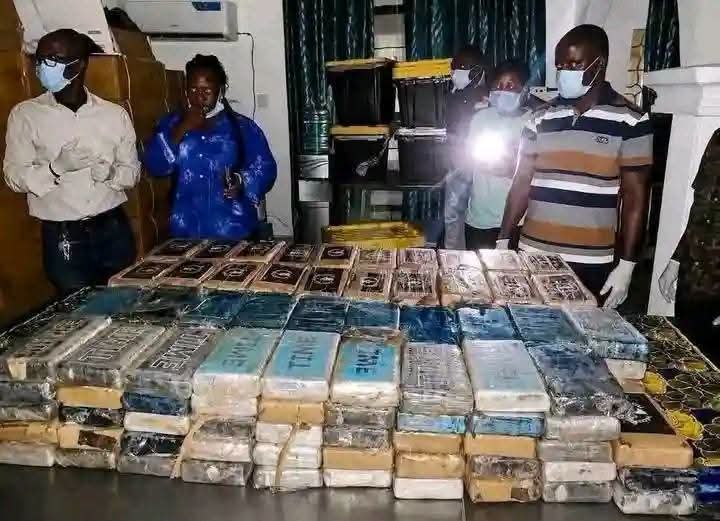
Key suspects linked to Liberia’s recent US$19.2 million cocaine seizure have reportedly fled the country, according to explosive allegations from an anonymous source. The informant further claims that a well-funded drug trafficking network used bribery to corrupt public officials and facilitate the escapes. However, these claims have not been independently verified, and no law enforcement agency has publicly confirmed the allegations.
The source alleged that Michael Brown and businessman Tony Margibi Deinukai have been longtime partners in drug trafficking activities spanning several years. According to the informant, Brown and Deinukai previously operated together during their tenure at Roberts International Airport, where certain airport employees were allegedly aware of their illicit activities. No evidence was provided to support this assertion.
The informant further claimed that a sophisticated criminal network orchestrated Brown’s release from prison by bribing influential figures across Liberia’s justice, security, judicial, and correctional sectors. The source suggested that Brown’s reported illness was merely a fabricated cover to secure his release and facilitate his flight from justice. No documentary evidence has been presented to substantiate these bribery claims, and the targeted institutions have not publicly responded to the accusations.
According to the anonymous informant, Brown also arranged for his girlfriend, Toushe Grant—who reportedly uses the alias “Jojo El-roi”—to leave Liberia. Grant allegedly departed for Accra, Ghana, aboard a Nigerian airline just one day after authorities announced the cocaine seizure and following the public circulation of surveillance footage tied to the investigation. Brown himself reportedly escaped Liberia by road through Côte d’Ivoire before eventually arriving in Ghana. These travel claims remain unverified by immigration officials.
The source also alleged that another individual, Oscar Brown, is no longer in China and has relocated to Taiwan. Authorities have not confirmed the whereabouts of any of the individuals mentioned.
In addition, the informant claimed to possess extensive details regarding the operations of Brown, Deinukai, Oscar Brown, and several other individuals accused of participating in the organized drug trafficking network. Among those named were Paul King, Peter King, and Arthur Abdullai, whom the informant identified as members of the same criminal enterprise. None of the named individuals have publicly responded to the allegations, and no formal charges have been cited in connection with the source’s claims.
The anonymous source expressed deep fears for personal safety, stating that concerns over retaliation have prevented them from disclosing this information directly to security authorities. The informant appealed for confidentiality while urging state investigators to actively pursue these leads.
These latest claims surface amidst intense public scrutiny over Liberia’s handling of the US$19.2 million cocaine case. The investigation has fueled widespread public concern regarding the reach of local drug trafficking networks, official corruption, and systemic weaknesses within the country’s criminal justice apparatus.
At the time of publication, Liberian security agencies had not issued an official statement responding to these new allegations. The claims remain unverified, and all individuals named are presumed innocent unless proven guilty in a court of law.

Comments are closed.